
HOW LONG DOES BODY RECOMPOSITION TAKE?

 By @ALVEREZ.COACH | Personal Trainer, Pasadena TX | DRXVE
Short Answer
3 to 6 months for a full body recomposition cycle.
Not 3 weeks. Not 6 weeks. 3-6 months.
That's how long it takes to build lean mass, burn fat mass, and actually change your body composition if you do it right.
Here's the breakdown:
▸ What recomposition actually is
▸ What drives body recomp
▸ What can you expect each month
▸ Why most people fall off
▸ My personal recomposition story
▸ Examples of real people hitting recomp goals
▸ How we setup & plan your recomp goals & COMP Card
▸ Other body recomp info to read next
WHAT IS BODY RECOMPOSITION?
Body recomposition means changing what your body is made of, not just what it weighs.
You ARE your lean mass (LM): muscle, bone, organs. You HAVE fat mass (FM): stored energy.
The goal:
- LM ↑ (build what you are)
- FM⇣ (reduce what you have)
The scale may move a lot. Or barely a little. But your body completely changes.
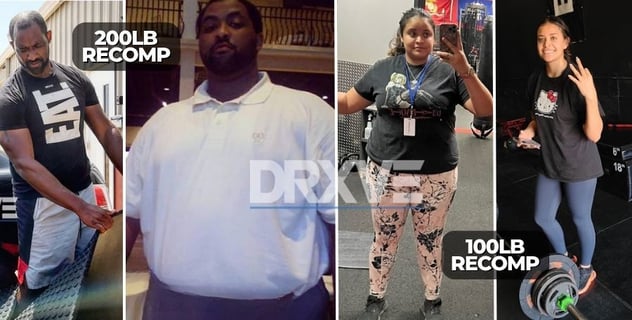
It's not just losing weight. That's recomposition and it's why scale weight is the wrong way to measure it.
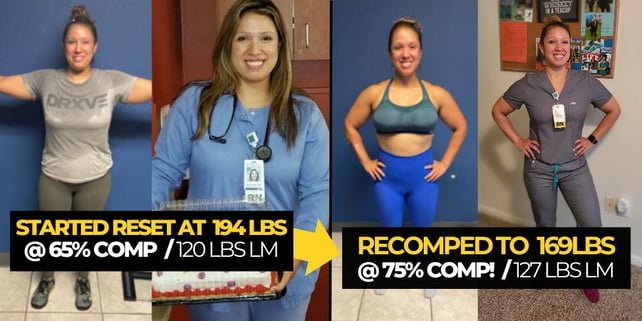
What is body recomposition? Full breakdown →
WHAT ACTUALLY DRIVES RECOMPOSITION
Two things have to work together. Neither one alone gets you there.
Training builds lean mass.
Specifically strength training with progressive overload - lifting more over time, building muscle tissue, changing your body composition from the inside. Cardio alone doesn't build lean mass. Random workouts that don't progress don't build lean mass. Programmed strength training does.
How training drives body recomposition →
Nutrition decreases fat mass.
Calorie deficit, protein targets, tracking consistently all 7 days - not just Monday through Thursday. The weekend gap is where most people sabotage their own progress without realizing it.
How nutrition drives body recomposition →
Together they work. Separately neither one produces real recomposition. Clock In to training. Lock In to nutrition. Both. For 6 months.
WHAT 6 MONTHS ACTUALLY LOOKS LIKE
6 months isn't one massive goal. It's a series of phases that build on each other. Most successful recomps follow a similar pattern regardless of starting point:
Phase 1: Learn (2-3 weeks) Understand how food actually works. Calories, macros, what you're actually eating vs. what you think you're eating. Build the habit of showing up consistently. No pressure to be perfect yet - just build the foundation.
The most important tool in this phase: learning to see food through a macro lens rather than good food vs. bad food.
How to see food through the Macro Lens →
Phase 2: Execute (21 days) Prove you can actually do it. Same meals, consistent tracking, all 7 days. Week 2 is where most people fall off - the scale stalls and they think it's not working. It is working. Keep going.
What actually happens in the first 21 days →
THIS IS WHERE MOST PEOPLE GET STUCK. Listen to Diana's story:
Phase 3: Lock In (12 weeks) The real work. Life hits - stress, travel, work chaos, family demands. You stay on track anyway. This is where body composition measurably changes. This phase separates people who recomp from people who almost recomped.
Phase 4: Assess and Reset (1-2 weeks) Check your progress. Measure what changed. Most people who make it here commit to finishing. The results are visible enough to make the next 12 weeks feel worth it.
Phase 5: Run It Back (12 weeks) Same system, deeper execution. You know your body now. Push harder. Full recomposition becomes undeniable.
This is an optimal framework we use in the COMP Method, not a rigid prescription. Everyone's recomp looks different depending on where they start, how consistently they execute, and how their body responds. The timeline is real. The phases are flexible.
WHY MOST PEOPLE FALL OFF - AND WHEN
Week 2. That's when.
Not because it doesn't work. Because they don't understand what's happening.
Week 1: Your body drops 3-5 lbs of water weight as glycogen gets used up. The scale moves fast. Feels great. It's not fat yet - it's water.
Week 2: Water weight is gone. Fat loss started Day 1 but daily fluctuations from salt, hydration, and food timing mask the downward trend. Noise looks like stalling. This is when people fall off.
Week 3: Enough data to see the actual trend. Fat loss has been happening the whole time. You just couldn't see it yet.
Your deficit works from Day 1. What takes 2-3 weeks is seeing the signal above the noise.
What to expect in the first 21 days →
IT TOOK ME MUCH LONGER THAN 6 MONTHS
Before this page existed. Before the method existed. Before The Savage Lands.
I went from 435 lbs to 230 lbs. That's 205 lbs down!
But it took years, not 6 months, because I didn't have the knowledge, the coaching, or the framework. I figured it out through trial, error, frustration, and eventually becoming a personal trainer in Houston in the process.
If I had known then what's on this page, it would have been faster.
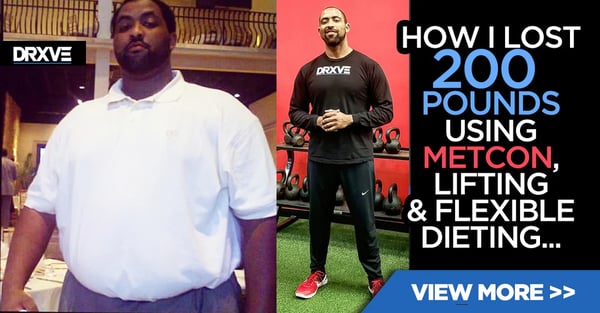
Read Alverez's full recomposition story →
RECOMPOSITION LOOKS DIFFERENT FOR EVERYONE
Same goal. Different starting points. Different results. Here's what it actually looked like for real people:
SELENA - Already Active, Not a Lot to Lose
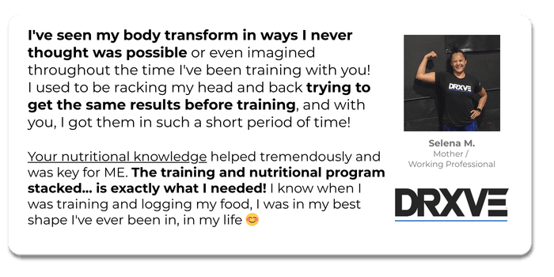
Already showing up to the gym. Not starting from zero. But working out without training and eating without tracking. Added 10 lbs of lean mass, increased lean comp to 81%. The scale barely moved. Her body completely changed.
CHASITY - Cardio Background, Changed Her Comp
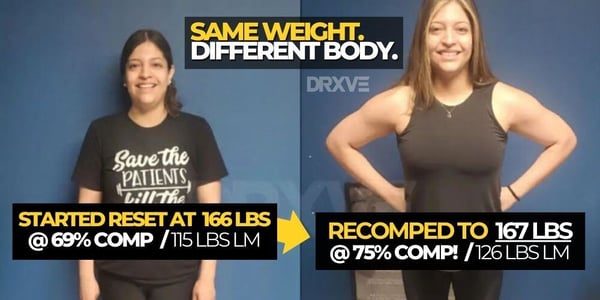
Not overweight. But did cardio consistently. But wasn't building lean mass. 3+ years of strength training later - physically and mentally stronger than ever. Recomposition doesn't always mean dramatic weight loss. Sometimes it means completely changing what your body is made of.
DIANA - Stuck Behind Nutrition
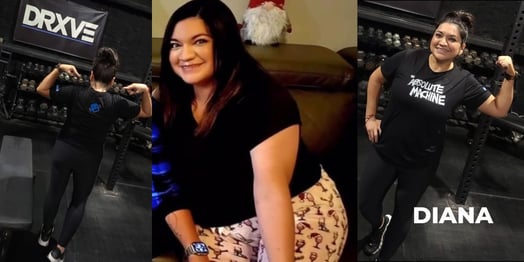
Training consistently. Eating clean Monday through Friday. Blowing it on weekends. Stuck between 185-189 lbs for months. Breakthrough came when she tracked all 7 days. 189 to 169 lbs. XL to Medium. Running for the first time in her life.
LIZ - Complete Full Recomp
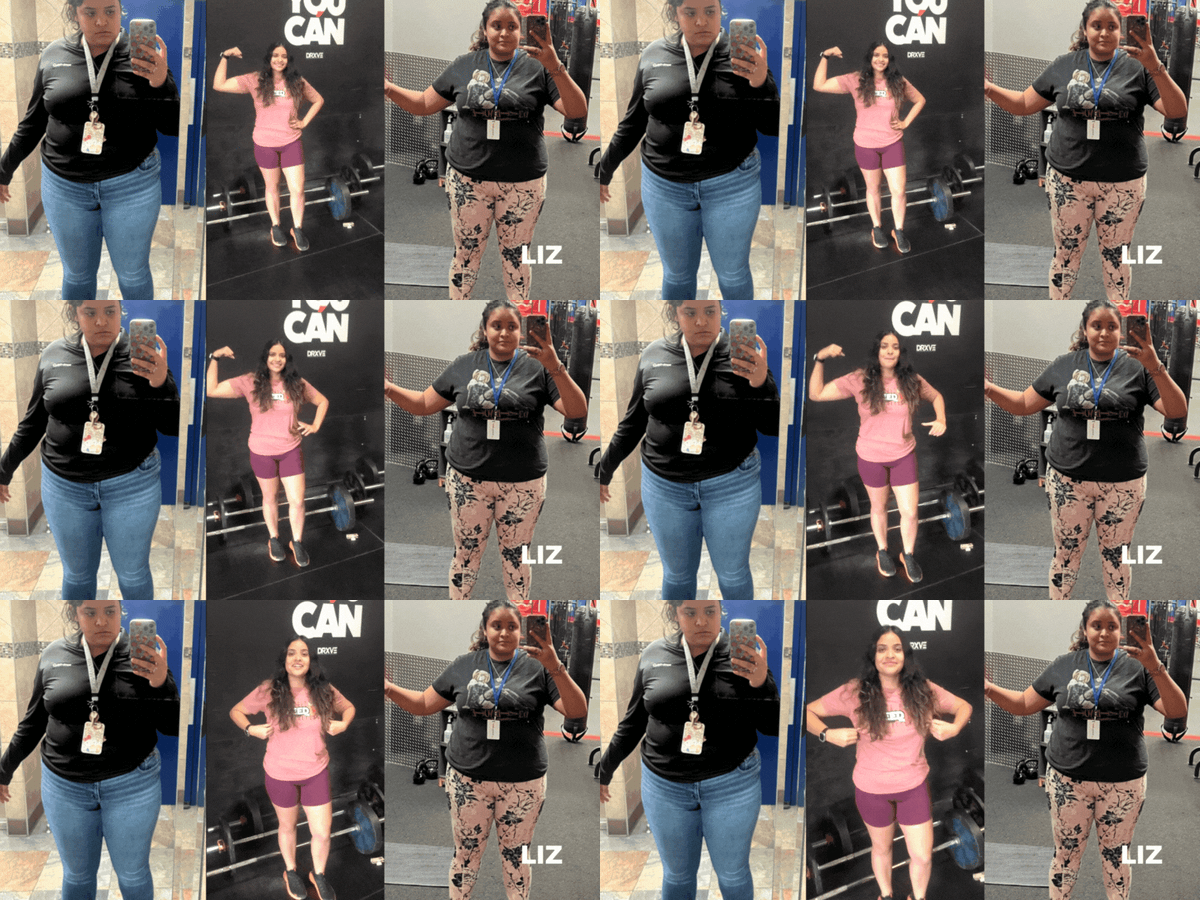
298 lbs. Never lifted before. Zero athletic ability. Started losing weight on her own then joined DRXVE to finish what she started. Trained 5X/week at 6AM. Tracked macros daily. 100 lbs down. Complete body recomposition.
JAY - Men's Recomp at 57
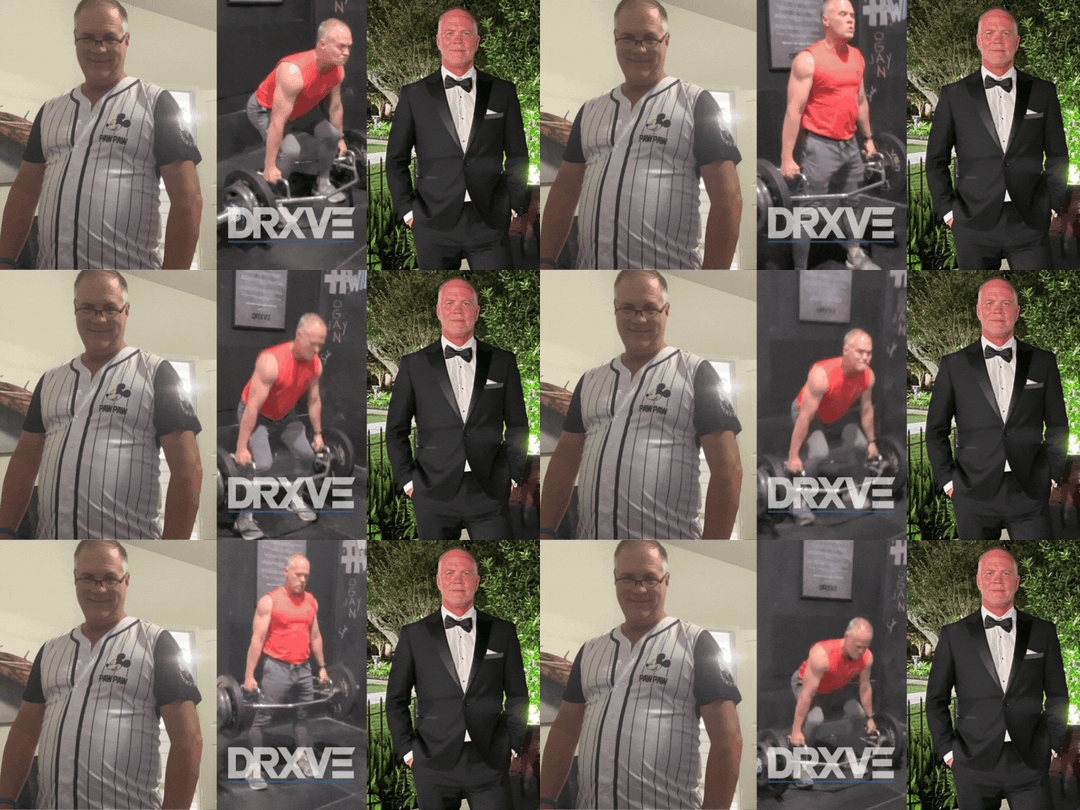
207 lbs. Couldn't do one pullup. 2+ years later - 210 lb bench press, 8 pullups, six-pack abs. Best shape of his life at 57. Men's recomposition takes longer to show visually but the strength gains come fast.
YOUR 6-MONTH RECOMPOSITION PLAN: THE COMP CARD
Most people chase a number on the scale. The problem is that number doesn't tell you what your body is actually made of.
Your COMP Card does.
When you start at DRXVE we build your COMP Card on day one. It shows your current lean mass percentage, your current fat mass percentage, and realistic projections for where both are headed over 6 months based on your training frequency and nutrition targets.
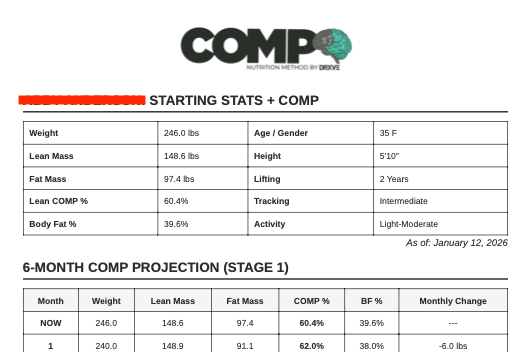
We'll also set COMP Goals based on your body type & preference.
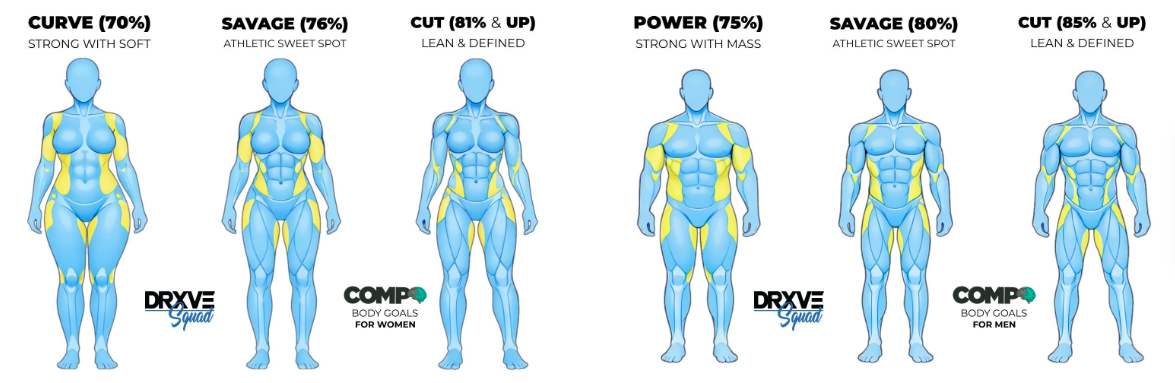
Your 6 month goal depends on where you start. But the direction is always the same: lean mass percentage up, fat mass percentage down. As those two numbers shift, your body shape changes - even if the scale barely moves.
Two people can weigh the same and look completely different based on their COMP. That's why scale weight alone is a terrible measure of recomposition progress.
The best way to measure your recomp isn't the scale.
It's with work & a goal shirt.
Angela earned her smaller shirt with the work!
Regardless of what the scale says, your body shape will change as your COMP changes. The most honest way to track that is with something physical - clothes that don't fit yet but will.
I used "TEST POLOS" during my 1st Body Recomposition Push!
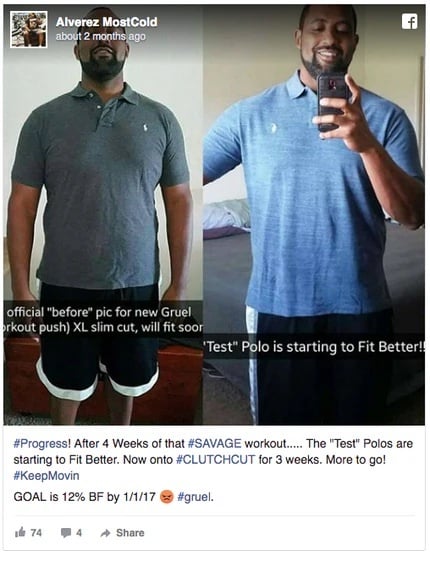
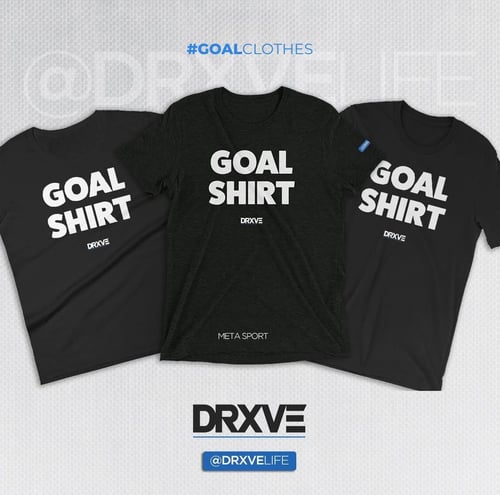
Now.. That's what we do at The Savage Lands. Pick Your GOAL Shirt 1-2 Sizes TOO SMALL!
We run you through your body recomposition training and nutrition, check in against your COMP Card goals, and make that shirt fit in 6 months or less.
See more about the COMP Method →
THE BOTTOM LINE
Body recomposition takes 6 months or more because that's how your body works. Muscle builds slowly. Fat burns systematically. The people above got there because they stopped looking for shortcuts and committed to the process.
You can too.

→ View the YOU CAN Video Series